

About
(03)
L.A.
From Zurich, now to London.
© 2026




TEDxZurich
Three and a half years volunteering at TEDxZurich. Started as Visual Designer, ended up running the Design and Marketing team.
That progression wasn't planned. But when you're in a room full of people who care deeply about ideas and nobody is getting paid, you learn fast what good leadership actually looks like. You either step up or the whole thing falls apart before the event does. We grew the newsletter by 32 percent. Social engagement up over 20 percent. Content turnaround cut by roughly a quarter. Real numbers from a volunteer operation with no agency budget and a team of developers, animators, writers, and a social media manager who all had day jobs. Some of the most useful experience I have came from that team.
United Nations
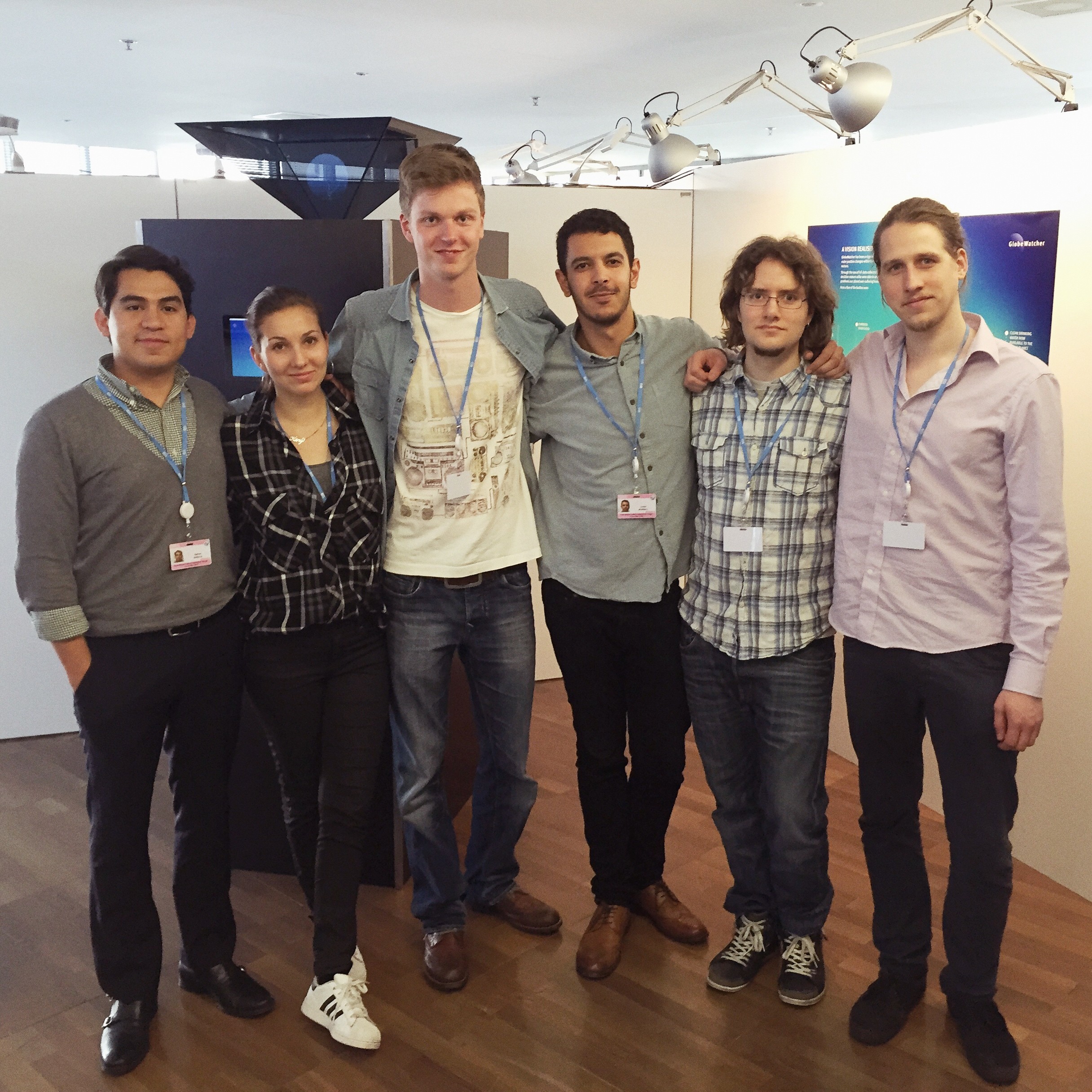
A holographic data installation. At the United Nations. During my research fellowship at FHNW.
An international team spread across Switzerland, Mexico, the Netherlands, and Germany. This was an IoT collaboration with Swisscom for a holographic data installation exhibited at the United Nations ITU 150th anniversary in Geneva. iPOLE was unlike anything else I've worked on. Designing for physical, interactive space rather than a screen, tests every assumption you have about how people process information, quite fast. And the Martin Cooper was around to see it. The man who invented the mobile phone. He looked at what we built, said something, and walked on. I heard every word. I'll tell you about it in person someday.
ICTVC
International Conference on Typography & Visual Communication
My first taste of the design industry. Still a student, still figuring things out. I helped organise ICTVC, an international typography conference hosted at the University of Nicosia. Logistics, speaker care, making sure the right people were in the right place. What stayed with me wasn't the work. It was the access. Neville Brody OBE. Petr van Blokland. Both in the room, both genuinely happy to talk. That kind of thing happens when a department head has spent decades building real relationships with the people shaping the field. Klimis Mastoridis had done exactly that. Small university. Big room.
ISTD
International Society of Typographic Designers
Getting accepted into the ISTD is not a given. You submit work, it gets judged, and most people don't make it through. My small book Theoktonia did. It was a typographic project examining how organised religion, across history, has functioned as a tool of control rather than meaning. Heavy subject matter. The kind that only works if the typography is doing real intellectual work, not just looking interesting. It was recognised for typographic excellence in 2014. And it remains the project that most surprises people when they hear about it. Which is exactly why it's here.